Succulent Stress / Colour
What is Succulent Stress?
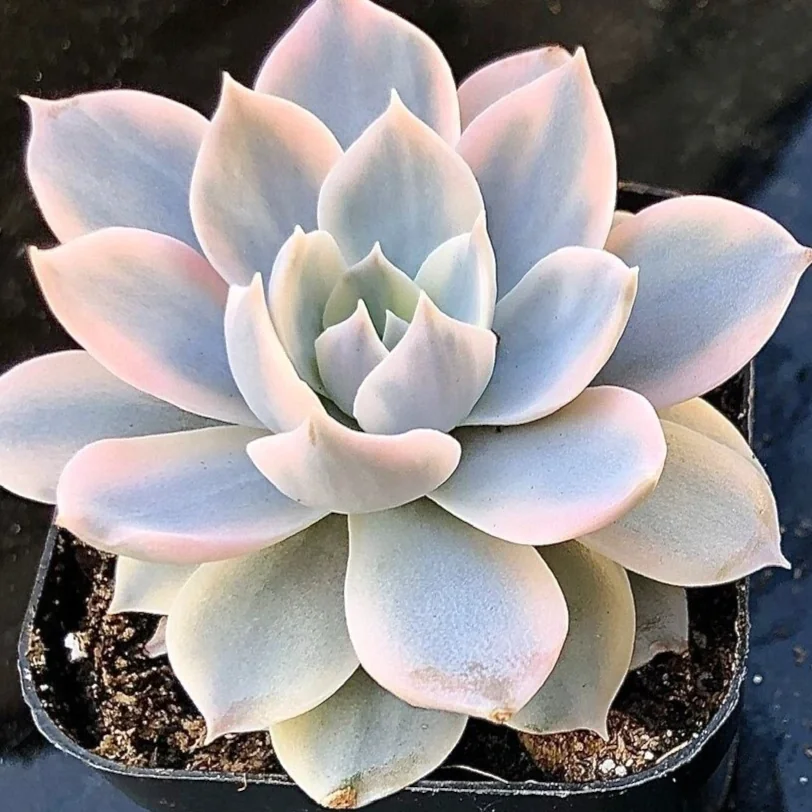
When succulents are exposed to certain conditions, they become “stressed.” This essentially means that certain external factors can cause physical or cellular changes that result in a different appearance. When succulents are stressed (in the right way), it can often bring out their best colour and most desirable appearance. For example, Asian echeveria hybrids can exhibit dramatic colours when fully stressed, but be much more muted or fully green when not.
The factors that can stress a succulent are 1) light intensity (and UV radiation), 2) temperature, 3) drought (lack of water), and 4) root maturity. Different species respond differently to different stressors. The key to stressing succulents well is is to induce a certain amount of “stress” without overdoing it. Growing with a little stress often makes succulents look their best, and this is what I do in my propagation for Succuland. Some species look very different when stressed, others barely different at all. They can also experience this to varying degrees, with slight stress bringing about a small colour change or “blush,” while fuller stress may bring more drastic colour changes.
Light
All succulents need good light to have their best colour and compact growth. Without good light, they can never look their best. Sufficient light supports good photosynthesis and affects succulent growth hormone balance (geeks: auxins and cytokinins), which keeps them compact. Further, in response to strong light, many succulents produce coloured pigments in their cells (geeks: anthocyanins, betalains, carotenoids, flavonoids, and xanthophylls). These pigments aren’t there to just make the plant look pretty. In nature they actually serve to protect it from damage from the sun; it’s the succulent’s version of getting a “tan.” In general, bright light gives good colour. Some species change can back and forth from green to various colours depending on how bright their light source is. Further, ultraviolet (UV) radiation from the sun can also induce a colourful stress response in succulents. This is why sometimes natural outdoor sun (UV) and grow lights (bright light but usually no UV) can produce plants that look different. Excessive hot sun can be too much however, causing damage or a faded look.
It also just depends on the succulent. Some need UV to get their full colours, others do not. Some need stronger light than others to display good colour. Some will easily stretch if the light isn’t strong, other will naturally stay compact. If you purchased a nice colourful succulent and it faded, turned green or stretched and got leggy- this is often because the light it’s growing in is not as strong as before and not strong enough to induce the colour pigments and compact growth. Succulent newbies can get disappointed or confused when their plants fade or stretch and they don’t know why. This is why, in the “beginner recommended” section of my shop, I purposely select species and cultivars that are naturally resistant to stretching and don’t need quite as much light to stay compact or retain their colour.


Temperature
In succulents’ native habitats, temperature changes can trigger stress responses and dramatic colours. Let’s talk about hot vs cold. In general, excessive heat is detrimental to appearance. Years ago, I noticed that potted succulents sitting directly on my south-facing balcony deck (very hot; no breeze) were looking faded or “tired.” Yet the same types in rail planters or elevated on a table (cooler with better airflow) looked healthier and had richer colour- despite receiving the same amount of sun. I later learned this happens because relentless heat can actually break down colour pigments (anthocyanins) in the cells. This is why many succulents, placed outdoors in summer, do best when in a spot that isn’t baking in heat all day, or in a spot that gets about half a day of direct sun. Tldr: excessive heat is not good.
On the other hand, let’s look at how cold can affect succulents. Again it depends on the species, but in habitat, winter temperatures can sometimes cause brilliant colours to emerge. This happens because the plants are slowing their metabolism/growth, and triggering protective responses (geeks: this is accumulation of anthocyanins and betalains, which help protect cells from cold damage). This gives the plants deeper blues, reds, purples, and pinks- a beautiful “survival glow.” For tender succulents (such as echeveria, native to Mexico), “cold” means 3-15C. Definitely not Canadian cold! Many actually can tolerate and survive a brief freeze or snow, but it’s not advisable to expose them to conditions lower than 3C, or they may be damaged. Tldr: cold stress from 3-15C can enhance colour, and can actually cause some succulents to reach their most colourful state possible.
I keep many of my tender succulents in a sheltered greenhouse on my deck over the winter. Temperatures range from 3-15C, and a heater automatically comes on at 3C and turns off at 5C. Coastal BC is mild so the heater remains off most of the time but becomes crucial during overnight frosts or during arctic outflows. The succulents stop growing and take a rest, requiring very little water from November – February. Some varieties develop their deepest, most beautiful colours in this time.
For most people in Canada, keeping tender succulents outdoors in a greenhouse over winter is probably not feasible. It’s just too cold and months of heating can rack up electricity bills fast. But if you place succulents outside in the fall/spring to expose them to cool (but not freezing) temperatures, they may develop beautiful cold stress colours. It can be very interesting to see how plants change appearance based on different temperatures at different times of year. Be sure to keep the soil fairly dry and protected from rain if you do this, as cool temperatures plus moisture can cause rot.


Drought & Root Maturity
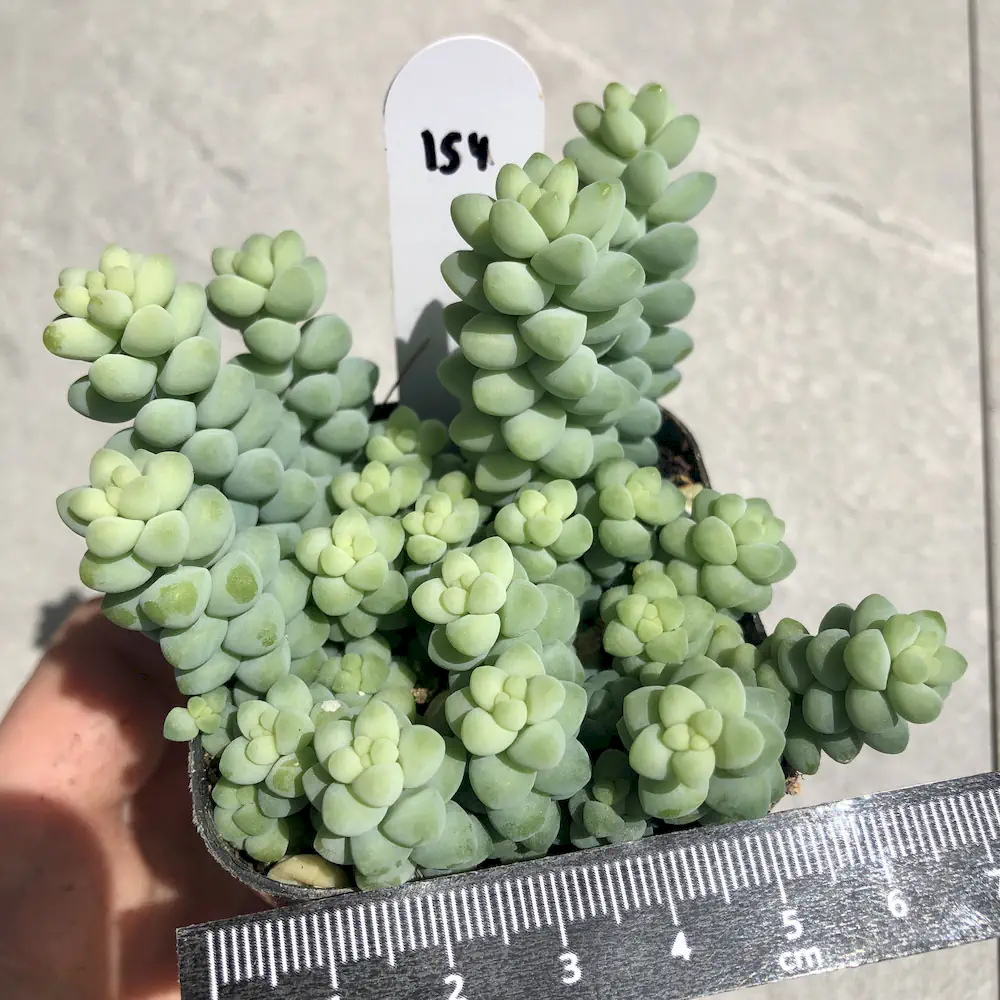
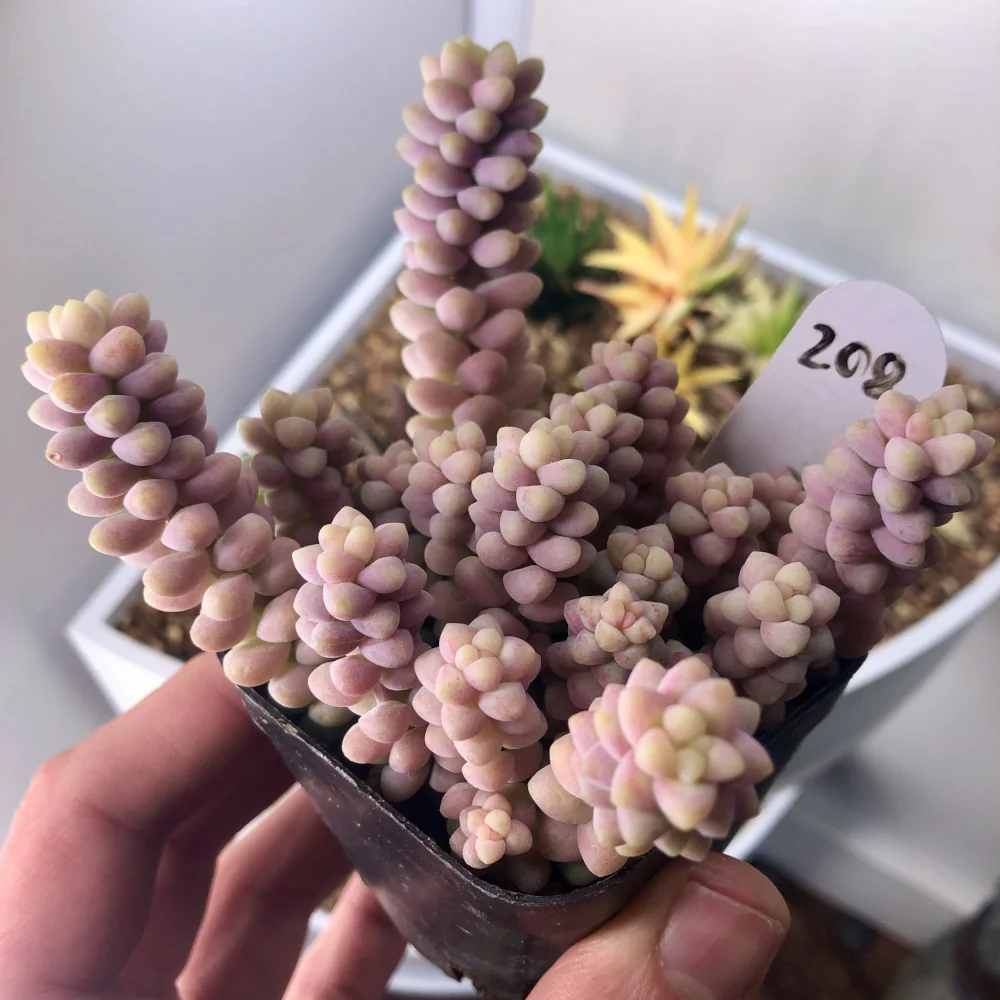
Drought is the final way to induce stress in succulents, and it ties in with root maturity. In habitat, succulents are sometimes forced to endure weeks or even months without water. These periods of drought induce stress colours in some species. Even in strong light, some plants may remain green if watered regularly, but become colourful after drying out. Plants that are larger or well established respond best to drought stress. Very small or not-established plants may simply wither or die if exposed to drought. If the plant starts to look shrivelled, it’s time to water- it’s getting too dehydrated.
Sometimes, drought stress is not achieved until the roots have filled the pot. In the past, I have purchased cuttings from stressed plants, often very colourful. Once planted, they sometimes revert to green while rooting but become colourful again later after the roots filled the pot. The mechanism for this is two-fold. First, when roots fill a pot, the soil drys out faster after watering, resulting in more drought and therefore more stress (more roots = more water uptake and transpiration in the plant). Second, root maturity in succulents (whether they reach their natural maximum size in the ground, or they fill a pot and cannot grow out anymore), induces hormonal and chemical changes in the plant, leading to increased colour. Geeks! Read on: root maturity/crowding causes a sharp spike in the plant stress hormone abscisic acid (ABA) that is associated with drought. When ABA spikes, the growth hormones gibberellins (GA), auxins and cytokinins decrease significantly. This causes the succulent to stop growing larger, and encourages a visually pleasing compact form. This is also why a succulent will generally not grow much larger than its pot. Further, the decrease in growth hormones and increase in stress hormones causes the plant to go into “defensive” mode, and activates stress-response pathways that spur the production of protective plant pigments (anthocyanins and carotenoids). This of course boosts colour in the plant.
In summary, all of this is why growth (in good conditions) usually follows this pattern: 1) a small cutting/plant is planted, and has “room” to grow. Growth signals/hormones activate, and the plant happily gets larger over time. The succulent’s form is less compact and colouration is often weaker. 2) when the plant grows as large as its pot and the roots cannot expand any more, the cascade of hormonal/chemical changes (discussed above) causes an increase in compactness, an increase in the “hardness” of the leaves, and an increase in pigment/colouration- all meant to increase the plants defences. This is when the succulent is sometimes at it’s most beautiful appearance.


Final Thoughts
Stressing succulents for deepest colour is a skill and an art that is best achieved after first learning the basics of succulent care (water, light, soil). If you are new to succulents, focus first on learning how to water appropriately and how to give the plant good light. Further, note that it can be difficult to stress plants indoors without grow lights- after all, succulents naturally grow outside, with plenty of sun and seasonal changes of temperature and water. This is why many people move their succulents outside in the summer (just make sure to do so according to the care instructions). Indoors, a sunny windowsill with full exposure can often yield good results in the brighter months of the year. Growing plants with grow lights for approximately 12 hours per day and allowing them to dry out between watering can also give good results. With no UV or cool temperatures, they may not be stressed to their full potential, but still look very attractive/colourful.
Do not expose succulents to stressful conditions suddenly. Sudden exposure to too much light/UV can cause burn. Many times (many, many times 🙂 ) I have made the mistake of placing plants in UV too quickly or too strongly, resulting in burn. Sudden exposure to “cold” is more forgiving, but it’s still best not to go from warm to cold suddenly (moving plants outside with overnight lows of 6-8C should be fine; 2-3C maybe not). Plant stress is best applied gradually and this will typically give the the best results, as these changes in the plants’ native environment occur gradually with the changing seasons.
Succulent stress is best achieved on plants that are established and healthy. If a plant is very small, not fully rooted, or struggling for whatever reason, stressful conditions can be to much to handle and it may be injured or killed. A large, established echeveria may take full sun in stride, while a baby one or an unrooted one may get completely fried in the same conditions.
Remember that there are thousands of succulent varieties, and each is different. Some may look drastically different under stress, others barely different. In general all need strong light to be stressed but different kinds will respond differently to UV, cold, and drought. Good plant care and observation will reveal each plant’s delightful surprises.
Finally, be aware that in the age of social media, plant people often post images of their plants only when they’re at their best. For succulents, this often means fully stressed. In reality the plants are not meant to look this perfect, colourful and photogenic all the time, all year long. Nor do they in habitat. Succulent newbies often purchase chubby, colourful, stressed plants and then think they’re doing something wrong when they don’t look as colourful all year long. We live in Canada, not southern California, and must make some concessions for indoor growing. For some kinds only grow lights can keep them looking their best all year round. Don’t feel bad if your succulent doesn’t look as perfect as others on Instagram- I can 100% guarantee that they don’t look look like that all the time either. Not to mention the excessive use of filters, colour enhancement, etc. As is usual with social media people only want to show their “best.” I am somewhat guilty too 🙂 . Do your best to care well for your plants and learn to accept that they won’t, and shouldn’t, look perfect all the time; but bask in their glory when they do!
Gallery – Succulent Stress In My Garden